Listen to this article
If your hot water comes out of the bathroom tap no hotter than about 50 degrees, that is by design — and it is a safety feature, not a fault. New Zealand's plumbing rules limit the temperature of hot water delivered to fixtures used for personal washing to reduce the risk of scalding, especially for children and the elderly. The device that makes this happen is a tempering valve. Here is how it works and why your cylinder still stores water much hotter than that.
Two Temperatures: Stored vs Delivered
This is the key thing to understand. Hot water has to be stored hot — at 60 degrees or above in the cylinder — to kill Legionella bacteria, which can grow in warm water. But water at 60 degrees can cause a serious scald in seconds. So the water is stored hot for safety, then cooled down before it reaches the bathroom tap or shower. That cooling-down is the tempering valve's job.
What a Tempering Valve Does
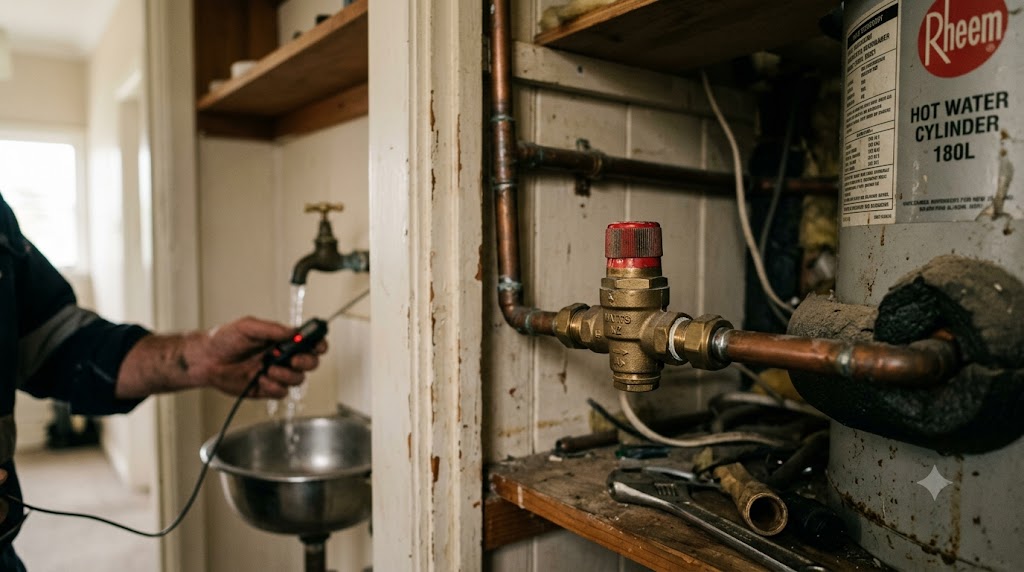
A tempering valve (also called a thermostatic mixing valve) sits on the hot water line after the cylinder. It blends a little cold water into the hot to bring the delivered temperature down to a safe level for washing — around 50 degrees — and holds it steady even as demand changes. You get water that is hot enough to be useful but not hot enough to scald.
The 50 Degree Rule
Under New Zealand's Building Code (clause G12), hot water delivered to sanitary fixtures used for personal hygiene — basins, baths and showers — is limited to a maximum temperature at the tap. This has been set at 50 degrees for most homes. It does not apply to the kitchen or laundry, where hotter water is useful for cleaning, and it does not change the minimum storage temperature in the cylinder, which stays high to control bacteria. The rule applies to new plumbing systems and new installations.
Note: regulatory details and effective dates can change. We confirm the current requirements as part of any hot water work, and we recommend checking with us or your plumber for the exact rules that apply to your installation.
Why It Matters
Scald injuries from hot tap water are common and entirely preventable, and young children are most at risk because their skin burns faster. A tempering valve is a simple, inexpensive device that removes that risk while keeping your stored water safe from bacteria. If your home does not have one, or the hot water at the bathroom tap is uncomfortably hot, it is worth getting checked.
Do You Have One? When to Check
If your bathroom hot water is scaldingly hot, your home is older, or you have just replaced a hot water cylinder, it is worth confirming a working tempering valve is fitted and set correctly. Like any valve, they can fail over time — a sign is hot water that has become either too hot or strangely lukewarm at the bathroom taps. When you replace a cylinder, a compliant tempering valve setup is part of the job — see hot water cylinder vs continuous flow for more on hot water systems.
Hot Water and Tempering Valve Work Across Auckland
Water and Gas Worx installs, checks and replaces tempering valves as part of hot water work across Auckland. See our hot water services and our areas we service.
Call 0800 322 322 or email [email protected].
Frequently Asked Questions
Why is my hot water only 50 degrees at the tap?
Because a tempering valve is limiting the delivered temperature to prevent scalding at fixtures used for personal washing. The water is stored much hotter in the cylinder for safety against bacteria, then blended down to a safe level before it reaches your basin, bath or shower. This is required by the Building Code for personal-hygiene fixtures.
Why does the cylinder store water at 60 degrees if 50 is safer?
Storing water at 60 degrees or above controls Legionella bacteria, which can grow in warm water. The tempering valve then cools the water down to a safe washing temperature on its way to the tap. So you get the bacterial safety of hot storage and the burn safety of cooler delivered water.
Does the 50 degree limit apply to my kitchen tap?
No. The limit applies to fixtures used for personal hygiene — basins, baths and showers. Kitchen and laundry taps are not subject to the same limit, since hotter water is useful for cleaning and washing up there.
How do I know if my tempering valve has failed?
The usual signs are bathroom hot water that has become either too hot (a scald risk) or oddly lukewarm and unable to get warm enough. Tempering valves can wear out over time. If you notice either, have it checked — it is an inexpensive part and an important safety device.