Listen to this article
A burst pipe is one of the most damaging plumbing events a homeowner can face. The volume of water released in a short time can destroy floors, walls, ceilings, and possessions. Most burst pipes are not random events — there are warning signs and preventable causes. Here is how to reduce your risk.
What Causes Pipes to Burst?
Corrosion (The Most Common Cause in Auckland)
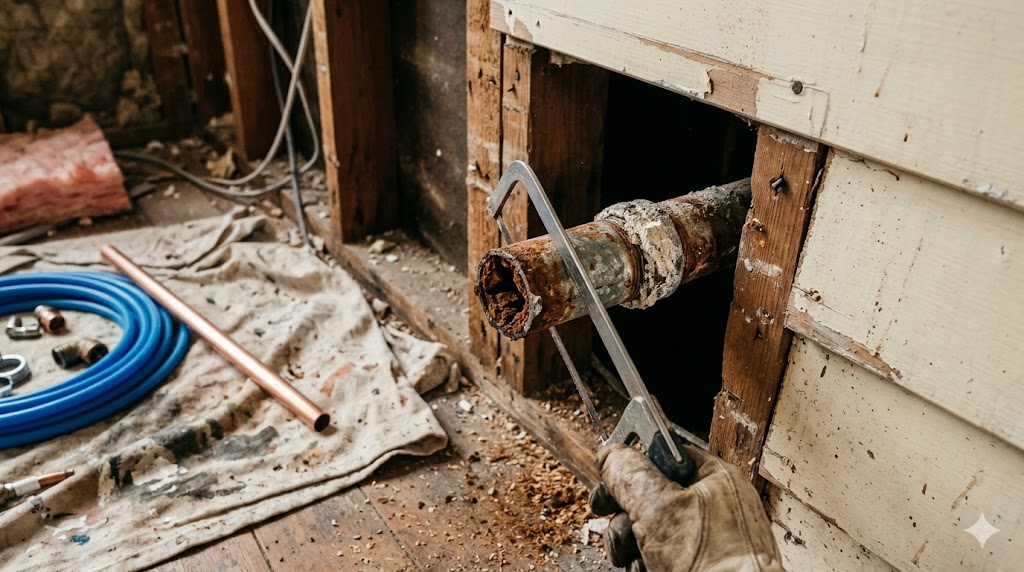
Old galvanised steel pipes corrode from the inside over decades. The pipe wall gets progressively thinner until it fails — often at a joint, elbow, or fitting where stress concentrates. This is a slow process, but the failure itself can be sudden and dramatic.
If your home is more than 40 to 50 years old and you have not had the plumbing assessed, this is your biggest risk factor. Consider a pipe replacement before a failure forces the issue.
Flexi Hose Failure
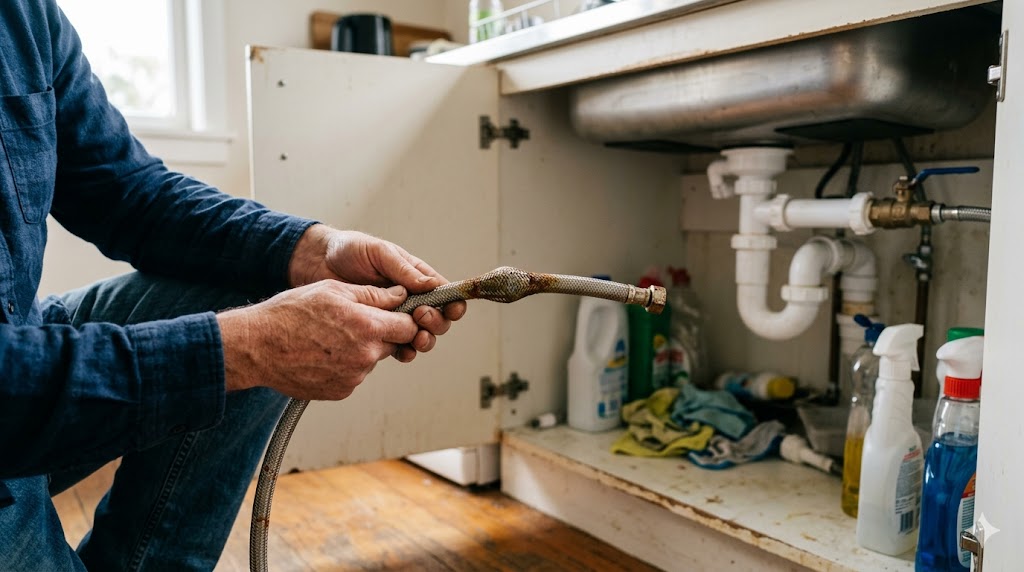
The braided flexible hoses under your sinks, vanities, and behind toilets are one of the leading causes of water damage in New Zealand homes. The outer stainless braid can corrode from the inside of the braid outward (often invisible until it fails) or suffer physical damage. When a flexi hose lets go, it flows at full mains pressure until someone turns it off — which can be hours if no one is home.
Flexi hoses should be replaced every 10 years as a precaution. It is cheap insurance.
Water Hammer
Water hammer is the banging or thudding noise when taps are turned off quickly or a washing machine solenoid valve closes suddenly. It is caused by the pressure shock wave travelling through the pipes. Over time, repeated water hammer fatigues pipe joints and fittings, eventually causing failure.
If your pipes bang regularly, a plumber can install pressure limiting valves or water hammer arrestors to solve the problem.
High Water Pressure
Auckland's mains water pressure can be high — particularly in lower-lying areas. Watercare supplies water at varying pressures across the network. Consistently high pressure puts stress on every fitting, joint, and appliance in your home. Many NZ homes have a pressure reducing valve (PRV) installed to regulate pressure at a safe level (around 350kPa). If yours is missing or not working correctly, your pipes and appliances are under unnecessary strain.
A plumber can test your water pressure in a few minutes. Anything above 500kPa warrants attention.
Physical Damage
Pipes damaged during renovations, landscaping, or digging are a common cause of burst pipes. Always check with your plumber before breaking ground or opening walls — pipe plans can often be obtained or pipes can be traced before work starts.
Prevention Steps
Replace Flexi Hoses Proactively
Do not wait for them to fail. Check the age of your flexi hoses — if they have not been replaced in the last 10 years, replace them now. A plumber can do a full set in a couple of hours. The cost is a fraction of what water damage repairs cost.
Have Old Pipes Assessed
If your home has original galvanised pipes, get a plumber to assess their condition. They can be pressure tested and visually inspected (where accessible) to gauge how much life is left. This gives you time to plan a repipe on your schedule, not on the pipe's schedule.
Check Water Pressure
Ask your plumber to test your water pressure at the next visit. If it is too high, a pressure reducing valve can be installed to bring it back to a safe level.
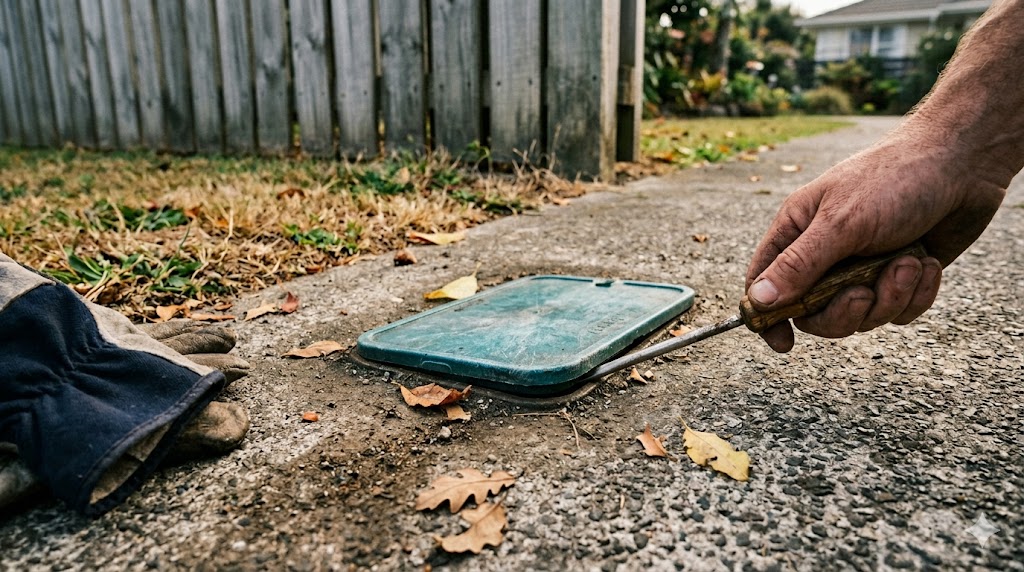
Know Where Your Toby Valve Is
In the event of a burst pipe, being able to turn off the water immediately limits the damage. Make sure you know exactly where your toby valve is and that it operates freely. If it is seized, have it replaced — a stuck toby is a serious problem in an emergency.
Turn Off Water When Going on Holiday
If you are leaving your home for more than a few days, consider turning the water off at the toby. A burst or leak that goes undetected for a week or two while you are away causes catastrophic damage. Also turn off washing machine tap valves to take pressure off those flexi hoses.
Install a Water Leak Detector
Smart water detectors (small sensors placed under sinks and near appliances) alert you on your phone the moment water is detected. Relatively inexpensive and very effective at catching leaks early. Some can even shut off the water automatically. Professional leak detection is also available for hidden leaks you cannot see.
If a Pipe Does Burst
- Turn off the water immediately at the toby valve
- Turn off the hot water cylinder at the switchboard
- Contain the water with towels and buckets
- Document the damage with photos for insurance
- Call an emergency plumber — 0800 322 322
Want a Pipe and Pressure Check?
Water and Gas Worx carries out plumbing assessments across Auckland. We are registered with the Plumbers, Gasfitters and Drainlayers Board. We can check your pipe condition, test your water pressure, inspect flexi hoses, and give you an honest picture of your home's plumbing health.
Call 0800 322 322 or email [email protected]
Frequently Asked Questions
What should I do first if a pipe bursts?
Turn off the water at the toby valve immediately — this stops the flow. Then turn off the hot water cylinder at the switchboard to prevent element burnout. Contain the water, take photos for insurance, and call us on 0800 322 322.
How quickly can a plumber come for a burst pipe?
For emergencies like burst pipes, gas leaks, or no hot water, we aim for same-day — often within a few hours during business hours.
How often should flexi hoses be replaced?
Every 10 years as a precaution, regardless of how they look. Flexi hoses corrode from the inside and can appear fine externally right up until they burst. Replacing a full set costs a few hundred dollars — far less than the tens of thousands a burst hose can cause in water damage.
How much does it cost to fix a burst pipe?
Our rate is $155 plus GST for the first hour, then $100 plus GST per hour after that. After-hours is $295 plus GST for the first hour, then $100 plus GST per hour after that. Public holidays are $395 plus GST for the first hour, then $100 plus GST per hour after that. We can quote before starting so you know the cost upfront. The repair itself usually takes 1 to 3 hours depending on access and the nature of the burst.